
China remains the backbone of global sourcing in 2025, and its international freight industry is predominantly supported by sea freight. This guide will explain in detail why you as an importer should choose China sea freight for your shipment and how to properly handle the entire process.
Why Choose Shipping From China
Cost-Effectiveness for Various Cargos
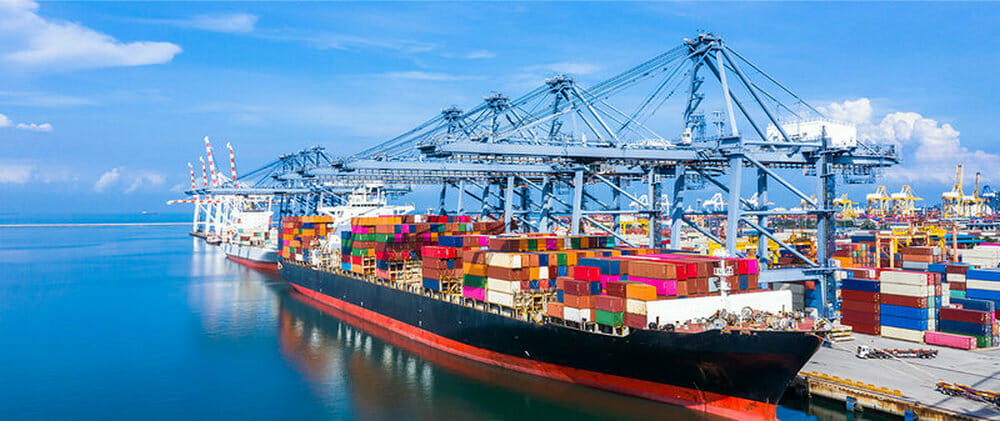
Sea freight from China is the most economical choice for shipping large volumes of goods out of the country, especially for non-urgent cargo. China’s ports are expertly equipped to handle a massive variety of goods efficiently.
| Cargo Type | Examples |
|---|---|
| Containerized Goods | Consumer goods, electronics, machinery |
| Bulk Raw Materials | Metal ores, coal, grains |
| Liquid & Energy Goods | Crude oil, chemicals |
Unmatched Scale and Reliability of Throughput
Choosing China for shipping services means tapping into a system of enormous scale and critical global importance. The numbers speak for themselves. With 30+ major ports along the meandering coastline, China’s ports handle a massive share of global trade. In 2023, China’s foreign trade seaborne volume accounted for 30.1% of the global total. In the first half of 2025, the volume of cargo moved by China’s shipping vessels reached 8.903 billion tons. This steady growth indicates a resilient and reliable supply chain.
Competitive Transit Times and Port Efficiency
While slower than air freight, sea shipping from China offers a balanced solution that is cheaper than air freight and more efficient than land freight. They weave a web of shipping routes which span across the globe with more than 120 trade lanes, greatly increasing the availability of their services and reducing the shipping time needed.
Crucially, Chinese ports are among the most efficient in the world because of the deployment of smart technologies including automated container terminals and intelligent guided vehicles.
This chart below contains estimated transit times under normal circumstances.
| Destination | Specific Route / Region | Average Lead Time | Key Chinese Ports |
|---|---|---|---|
| Europe | Northern European Ports (e.g., Rotterdam, Hamburg, Antwerp) | 30 – 45 days | Shanghai, Ningbo, Shenzhen, Qingdao |
| United States | West Coast (e.g., Los Angeles, Long Beach) | 13 – 18 days | Shanghai, Ningbo, Guangzhou, Shenzhen |
| United States | East Coast (e.g., New York, Savannah) | 25 – 35 days | Shanghai, Ningbo, Guangzhou, Shenzhen |
Extensive Network of Major Global Ports
Shipping from China gives you direct access to a world-class network of ports, providing great connectivity to global markets. Many of the world’s top container ports are located in China. Below are a few examples.
| Port | Global Rank (by throughput) | Key Characteristics & Data |
|---|---|---|
| Shanghai Port | 1 | The world’s busiest container port for many years. |
| Ningbo-Zhoushan Port | 3 | Noted for its exceptional growth, with container throughput jumping 9.9% in H1 2025 . |
| Shenzhen Port | 4 | A major hub in Southern China, it was the fastest-growing large Chinese port in H1 2025, with throughput up 10.8% . |
| Qingdao Port | Top 10 | A key port in North China with a strong and steady growth trajectory. |
This dense network of highly efficient ports ensures that your cargo, regardless of its final destination, can be routed smoothly and efficiently from multiple locations across China.

Incoterms You Must Know About Sea Freight
| Professional Term | Definition / Explanation |
|---|---|
| FCL (Full Container Load) | A service model where you pay for the exclusive use of an entire shipping container. Ideal for large shipments (e.g., over 18-20 CBM for a 20ft container). Offers lower cost per unit and less risk of damage. |
| LCL (Less than Container Load) | A service model for smaller shipments that do not fill a container. You pay for the volume (CBM) your cargo occupies within a container shared with other shippers. Involves extra handling for consolidation. |
| CBM (Cubic Meter) | The standard unit of measurement for calculating volume-based freight charges, especially for LCL shipments. |
| VGM (Verified Gross Mass) | The total certified weight of a packed container (including cargo, pallets, and packaging). It must be submitted to the carrier before the shipping deadline for safety reasons. |
| B/L (Bill of Lading) | A critical legal document issued by the carrier that serves as a receipt for the goods, a contract of carriage, and a document of title (proof of ownership). |
| Detention and Demurrage (D&D) | Fees charged when a container is not returned to the carrier (Detention) or remains at the port terminal (Demurrage) beyond the allotted free time. |
| BAF (Bunker Adjustment Factor) | A surcharge levied by carriers to cover fluctuations in the cost of fuel (bunker fuel). |
| CAF (Currency Adjustment Factor) | A surcharge to account for fluctuations in currency exchange rates, protecting the carrier from losses. |
| GRI (General Rate Increase) | A periodic, across-the-board increase in base ocean freight rates announced by shipping lines. |
| THC (Terminal Handling Charge) | A fee charged by the port terminal for the handling of containers at the origin or destination port. |
| CFS (Container Freight Station) | A warehouse where LCL shipments are consolidated into containers for export or deconsolidated upon import. CFS charges apply for this service. |
| HS Classification (Harmonized System Code) | An internationally standardized system of names and numbers for classifying traded products. It is essential for determining import duties and taxes. |
| COO (Certificate of Origin) | A document certifying the country in which the goods were manufactured. It may be required for customs clearance to determine tariff rates. |
FCL vs LCL: Service Models for Shipping From China
The End-To-End Shipping Process
Understanding the key stages of the shipping journey helps you plan effectively and avoid unexpected delays. Here is a streamlined overview from factory to final delivery.
Step 1: Origin Handling & Booking
- Cargo Readiness: Your goods are packed, labeled, and prepared for transport. For FCL, the container is typically stuffed at the factory. For LCL, cargo is sent to a warehouse for consolidation.
- Submission of VGM: The Verified Gross Mass (VGM), or the total weight of the stuffed container, must be submitted to the carrier before the strict cutoff time.
- Space Booking: Your freight forwarder secures space with a shipping line and provides you with the booking confirmation.
Step 2: Export Customs & Loading
- Export Clearance: Your forwarder or supplier handles the export customs declaration in China.
- Port Arrival & Loading: The container is transported to the port, gated in, and loaded onto the designated vessel. You will receive the Bill of Lading (B/L) as proof of shipment and title document.
Step 3: Ocean Transit & Pre-Arrival
- On the Water: The vessel sails to the destination port. Transit times depend on the chosen route and service.
- Pre-Arrival Preparation: As the vessel approaches, prepare import documents and ensure your customs broker is ready. Advance security filings (e.g., ISF for the USA, ENS for the EU) must be submitted.
Step 4: Import Clearance & Final Delivery
- Import Customs Clearance: Your appointed customs broker clears the goods through the destination country’s customs authority.
- Last-Mile Delivery: Once customs releases the cargo, it is transported from the port to your final destination. For FCL, this is drayage. For LCL, the cargo is first deconsolidated at a warehouse.
- Container Return (FCL): Promptly unload and return the empty container to avoid detention and demurrage (D&D) charges.
China Sea Freight Rates: Calculating Shipping Cost
Base Ocean Freight, Surcharges, and Accessorials
A typical quote includes:
- Base ocean freight: The core rate per container or per CBM (for LCL). This is often referred to as the ocean rate.
- Surcharges: BAF (bunker fuel), CAF (currency), low-sulfur or environmental fees, peak season surcharges, and security charges.
- Origin/destination charges: Terminal handling, documentation, customs clearance fees, CFS charges (for LCL), and delivery order fees.
- Accessorials: Chassis, pre-pull, storage, appointment fees, and special handling. Detention and demurrage (D&D) accrue if boxes linger beyond free time at terminals or off-terminal.
The cleanest budgeting separates line-haul (ocean) from port and inland costs, then applies realistic free time assumptions. Freight cost can vary based on these factors, and understanding freight charges is key to managing shipping cost.
How Weight, Volume, and Density Affect Charges
Containerized ocean pricing is driven by volume and equipment, not kilos. For LCL, freight is charged by CBM (with a minimum). For FCL, the container is a flat cost up to legal weight limits; density matters because over-grossing can trigger weight restrictions, reworks, or overweight fees for drayage.
Shippers should optimize the cube with pack plans: right-size cartons, align palletization with container dimensions, and reduce void fill to raise units per container and lower per-unit landed cost. Sea freight costs are influenced by these considerations, and rates for shipping should be compared for best value.
Seasonality, GRIs, BAF/CAF, and Currency Impacts
Expect shipping rate volatility around:
- Peak seasons (pre–Golden Week, year-end holidays) and disruptions (e.g., reroutings around conflict zones).
- GRIs (General Rate Increases) and QBFs/FAKs that carriers publish as the market tightens.
- Fuel and currency: BAF moves with bunker prices; CAF reflects USD fluctuations versus local currencies. Quotes are typically in USD, so exchange swings can affect non-USD payers.
Freight rates can change rapidly, so it’s important to monitor shipping schedules and obtain updated freight quotes from freight forwarders to secure competitive rates.
Estimated Cost Build-Up
A pragmatic cost model includes:
-
Base ocean (FCL or LCL),
-
BAF/CAF and seasonal surcharges,
-
Origin THC and documentation,
-
Insurance,
-
Destination THC, customs brokerage, duties/taxes,
-
Drayage and last-mile,
-
Contingency for D&D and disruption.
Good practice: hold a 10–20% buffer during volatile periods, lock in free time where possible, and pre-book equipment in peak windows. Scenario-test with two alternatives (direct vs transshipment) to see the trade-off between time and cost. Rates for shipping should be compared to find competitive rates, and ocean freight costs should be factored into the overall budget.
Compliance and Documentation
Commercial Invoice, Packing List, BL, COO, and Certificates
Core documents include the commercial invoice, packing list, and Bill of Lading. Certificates of Origin (COO) and product certificates (e.g., CE, UL, phytosanitary, MSDS) may be required depending on commodity and destination. Align descriptions, HS codes, quantities, and weights across all documents to avoid customs queries and delays. Proper documentation is essential for smooth freight shipment and customs clearance.
HS Classification, Valuation, Duties, and Taxes
Accurate HS classification underpins duty rates, import VAT/GST, and any trade remedies. Valuation should reflect the correct Incoterm: customs may add assists or royalties if omitted. Maintain classification rulings where possible, audit supplier invoices for completeness, and flag anti-dumping/countervailing measures that can materially change landed cost. This affects freight charges and total shipping cost, so working with a freight forwarding provider for logistics support is advisable.
Choose Luckystar as Your Freight Forwarder
China sea freight remains one of the most economical choices for high-volume imports. To fully leverage its advantages, partner with a reliable freight forwarder like Luckystar Logistics.
Founded by a team with over 20 years of combined experience, we are equipped to ensure smooth logistics and comprehensive end-to-end services, including customs clearance. We help you navigate the complexities of international shipping with reliable and flexible solutions tailored to your needs. Contact us today for your shipment!